
What is this Blog ALL About and Why Has it Been Created
Lorem ipsum dolor sit amet, consectetur adipisicing elit. Autem dolore, alias, numquam enim ab voluptate id quam harum ducimus cupiditate similique quisquam et deserunt, recusandae.
Latest Post
Blog 6: What Is Not Changing in the Revised Standards
Click on the link below to listen to the audio version of this blog post.
When people hear that ISO 9001, ISO 14001, and ISO 45001 are being revised, it is easy to assume the whole system is about to be turned upside down.
That is usually where the panic begins.
In the last five blog posts, we looked at what the transition is really about, why standards are revised, and what is likely changing in ISO 9001:2026, ISO 14001:2026, and ISO 45001:2027. Now it is time to look at the other side of the picture, because this is where a lot of unnecessary worry can be removed. The simple truth is that, while some emphasis areas are changing, the foundations of modern ISO management systems are staying in place.
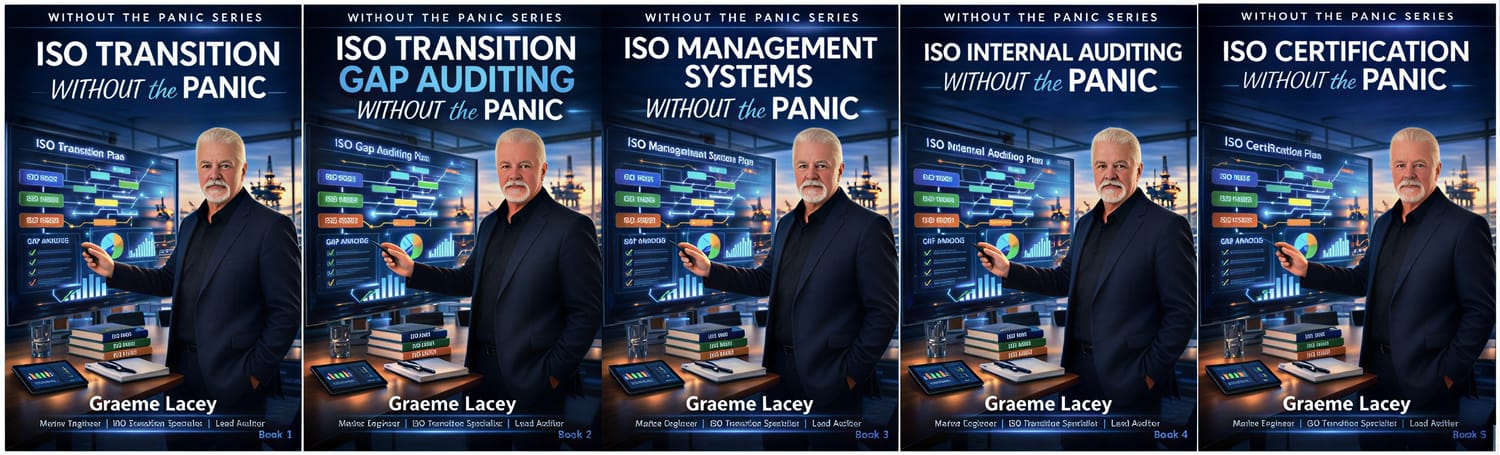
Book 1 of the ISO Transition Without the Panic series 'the Transition Pathway' says this very clearly: revisions maintain the fundamental principles and the overall structure of the standards, including the Harmonised Structure, process management, leadership accountability, risk-based thinking, and continual improvement.
That matters a great deal, because it means most organisations do not need to rebuild everything. They need to understand what is being sharpened, while keeping hold of what is already sound.
The overall structure is not being thrown away
This is one of the most important things to understand.
Modern ISO management system standards share a common framework.
Book 2 of the ISO Transition Without the Panic series 'Gap Auditing' explains that this shared structure remains largely consistent between revisions so organisations can integrate standards without rebuilding everything every time one of them is updated.
That stability is not an accident. It is one of the reasons integrated management systems are possible in the first place.
So if your organisation already runs ISO 9001, ISO 14001, and ISO 45001 together, the revision should not be treated as a signal to split them apart and redesign them from scratch. The framework is meant to remain recognisable, even when the wording and emphasis develop over time.
The basic management system principles are still there
This is where many people can relax.
The revised standards are not walking away from the core ideas that have shaped modern ISO management systems for years.
Book 1, the transition pathway says these principles persist across revisions because they represent the accumulated wisdom of what effective management systems actually require.
That means the following ideas are still central:
The system should reflect how the organisation really works.
Leadership should be accountable.
Processes should be understood and managed properly.
Risk should be considered as part of normal management.
Improvement should be ongoing.
Those are not temporary ideas. They are the backbone of the system.
The process approach is not disappearing
A good management system is still built around processes, not just documents.
That has not changed.
Book 1, the transition pathway says the focus on process management remains one of the principles that persists through revision cycles.
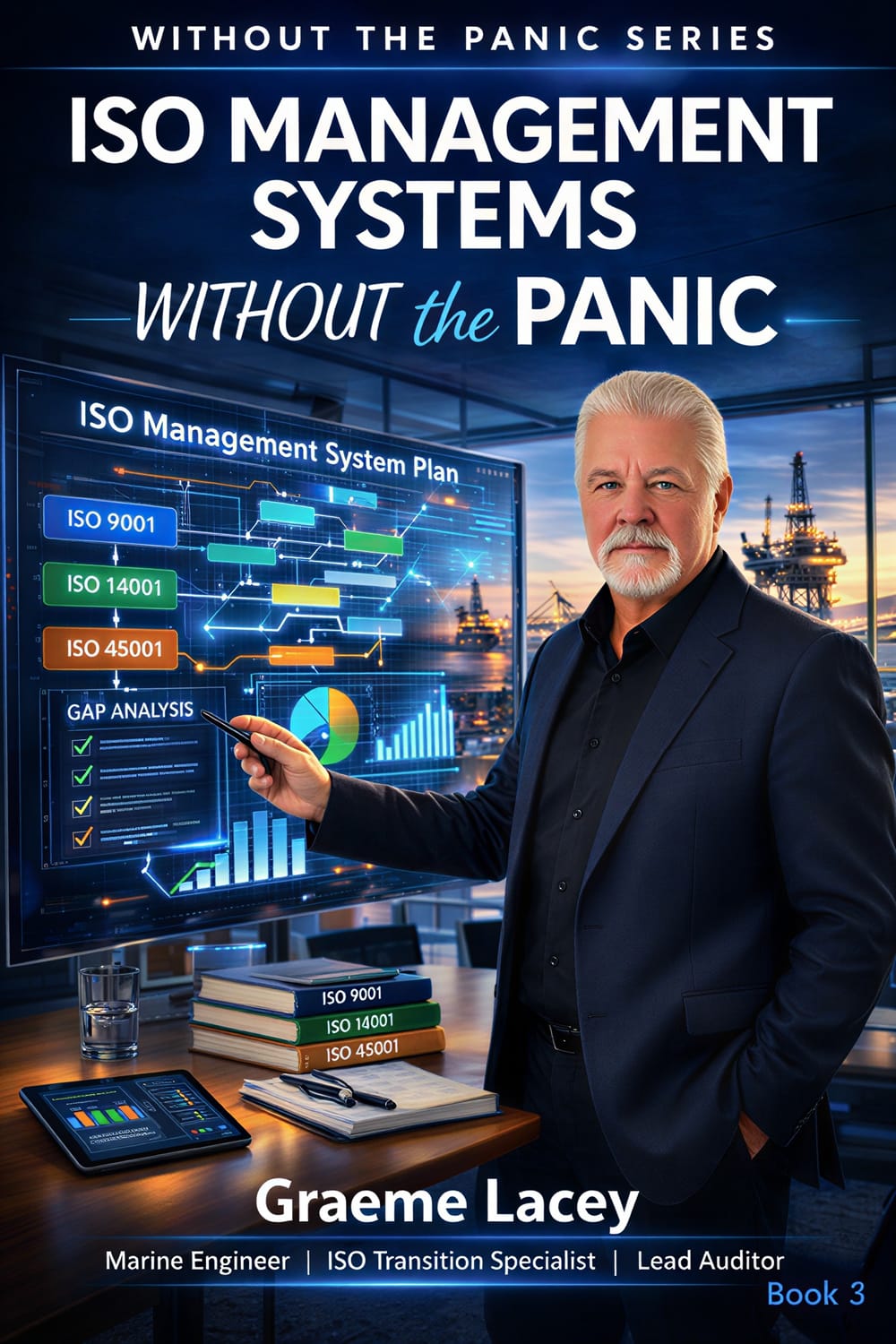
Book 3 of the ISO Transition Without the Panic series 'Management Systems' reinforces this by showing that process architecture remains central to implementation, and that the process architecture of an integrated system should be simpler than three separate systems glued together.
In plain English, organisations still need to understand how work flows, who owns each key process, what controls are needed, and how the process performs.
That was true before the revision, and it is still true now.
Leadership accountability is still fundamental
Leadership has been a major part of ISO management systems for a long time, and that is not changing.
What may change is how sharply it is examined, but the principle itself is already built in.
Book 1, the transition pathway says leadership accountability remains one of the enduring principles across revisions.
Book 3, management systems then makes the practical point that governance and leadership come first in the implementation sequence, before context, process design, documentation, and training.
So if leadership has been treating the management system as someone else’s project, that is a weakness to fix. But leadership itself is not a new idea being introduced by the revision. It is an old idea that remains essential.
Risk-based thinking is still part of the core
Some organisations still talk about risk as if it were a recent add-on.
It is not.
Book 1, the transition pathway says risk-based thinking remains part of the fundamental principles that continue across revisions. What revisions often do is not invent risk thinking, but push organisations to handle it more credibly and more naturally as part of planning and control.
So the message here is not, “Start doing risk for the first time.”
The message is, “Make sure your risk thinking is real.”
Continual improvement is still expected
This is another area that is easy to misunderstand.
Continual improvement does not mean constant upheaval. It does not mean large projects every few months. It means the system should keep getting a little better, a little more effective, and a little more aligned with what the organisation actually needs.
Book 3, management systems explains this clearly and says continual improvement is a requirement of every modern ISO management system, built into the normal management cycle.
That is not changing in the revised standards.
So when people ask what is not changing, this deserves to be on the list. The expectation that the organisation will learn, adjust, and improve over time remains firmly in place.
Certification still works through the same basic cycle
Many organisations also worry that revision means the certification world suddenly becomes unrecognisable.
Again, that is not the case.
Book 5 of the ISO Transition Without the Panic series 'Certification' explains that ISO certification follows a defined and predictable process, with Stage 1 and Stage 2 for initial certification, followed by surveillance audits and recertification in a three-year cycle. It also explains that the certificate remains valid through surveillance and recertification as long as the management system continues to meet the standard’s requirements.
So while transition timing and migration rules will matter, the basic logic of certification does not suddenly disappear just because a standard is revised.
The standards are still meant to be usable across the world
Another important point is that these standards remain global standards.
They are designed to be used by organisations in different countries, sectors, and sizes. That worldwide usability is one reason ISO standards are reviewed and revised in the first place, so they remain current and relevant internationally. ISO says standards are normally reviewed at least every five to ten years to determine whether they should be confirmed, revised, or withdrawn, helping keep them up to date and globally relevant.
So while country-specific regulations and local expectations may shape how an organisation applies the standards, the standards themselves are still intended to provide a shared international framework.
Revision still does not mean starting from zero
This point is worth saying again because it matters so much.
The ISO Transition Without the Panic series consistently warn against treating revision like a total restart. Book 1 says revisions refine and sharpen specific areas in response to changes in the world. They do not discard what came before.
Book 2, gap auditing makes the same point by explaining that stability in structure does not mean stability in emphasis, but neither does it mean a wholesale rebuild.
That means a sound system is still a sound starting point.
If your leadership is engaged, your context analysis is credible, your processes are real, your controls are proportionate, and your improvement process is active, you are not standing at the beginning. You are standing on a base that can be updated.
What this means in practical terms
The practical lesson is simple.
Do not panic just because there is a revision.
Do not assume every procedure must be rewritten.
Do not assume every familiar part of the system has suddenly lost value.
Instead, start with this question: what in our system is already solid and should stay in place?
That is often the best transition question of all.
From there, the task becomes much more sensible. You keep the foundations that still work and focus your effort on the areas where the revised standards are asking for clearer, stronger, or more current thinking.
Why this matters right now
This matters especially because the revision timelines are still active. The official ISO 9001 revision update still points to publication in September 2026, ISO has already released its 2026 material for ISO 14001, and the ISO 45001 review is still expected to run through to 2027.
In other words, organisations have time to prepare sensibly.
And sensible preparation always starts by separating what is changing from what is not.
Final thought
So, what is not changing in the revised standards?
The short answer is this: the foundations are staying put.
The overall structure remains.
The process approach remains.
Leadership accountability remains.
Risk-based thinking remains.
Continual improvement remains.
The certification cycle remains.
That should remove a lot of fear.
The transition is not about abandoning the core of modern ISO management systems. It is about making sure that core still works well in the world organisations now operate in.
That is a much calmer way to look at it, and a much better place to begin the next stage of preparation.
Coming next
In the next blog, we will look at why organisations panic during transitions.
That is an important next step because once you understand what is and is not changing, the next question becomes very human: why do so many organisations still react badly, and how can that be avoided?







Created with © systeme.io
Privacy policy | Terms of use | Cookies